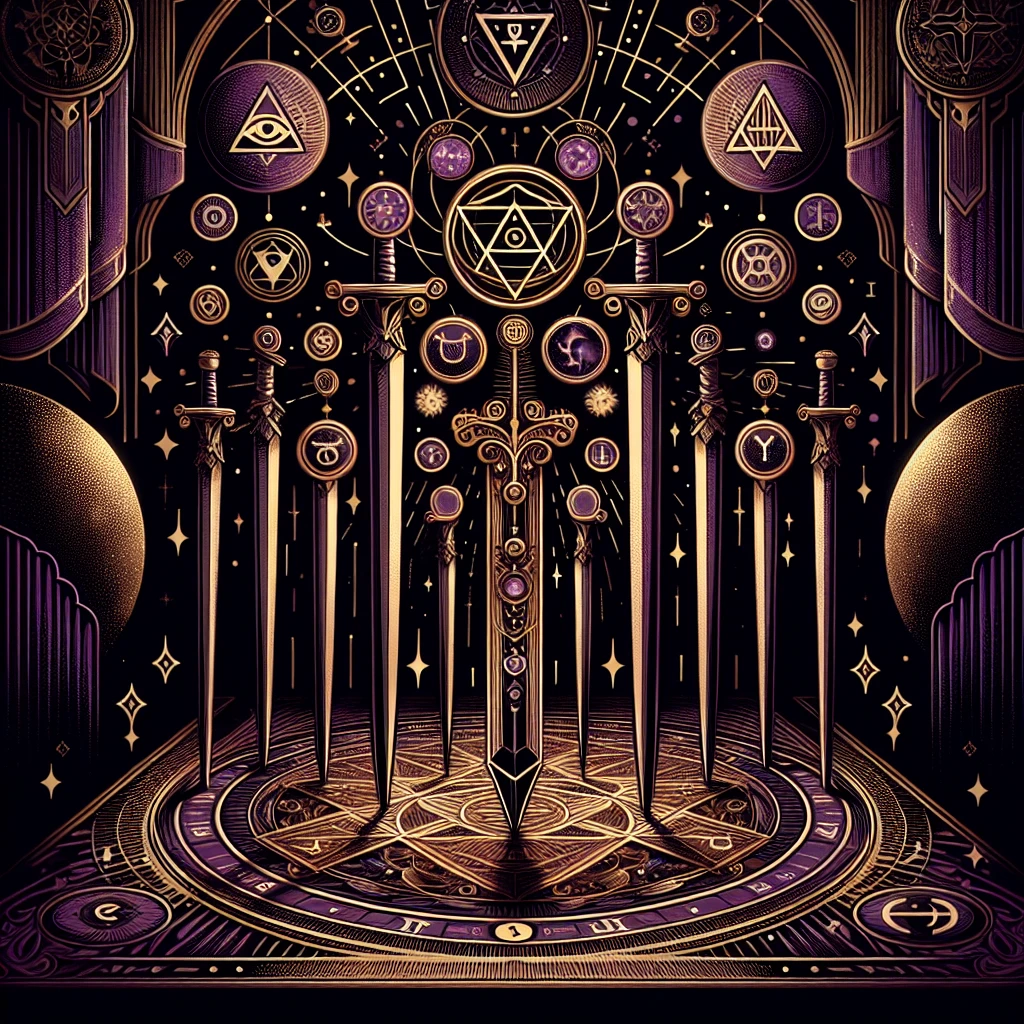
Ten of Swords Tarot Meaning: From Rock Bottom to Renewal

Ten of Swords Tarot Meaning: From Rock Bottom to Renewal

Let's be honest, nobody smiles when the Ten of Swords shows up. It’s a gut-punch of a card, and its picture of total defeat is brutal. But I need you to see what I see in it. This isn't about endless pain; it’s about the final, shuddering stop at the end of a miserable road. You've hit the absolute bottom. While that's agonizing, it also means the collapse is complete. From here, the only direction left is up.

What the Ten of Swords Really Shows You: From Collapse to Sunrise

The Ten of Swords is a card of stunning finality. It doesn't show a fight; it shows you the quiet, still moment after the fight is completely over. When you understand its potent symbols, you'll see it's not a message of despair, but one of tough, necessary closure and the first glint of a new morning.

The scene and symbols that set the tone

In the classic Rider Waite Smith deck, the picture is grim. A person lies face-down, pinned to the ground by ten swords. Above them, the sky is a thick, oppressive black, marking the absolute darkest point of the struggle. But I want you to look past the body. Notice the calm sea in the distance—that’s the emotional peace that finally arrives after the chaos ends. More importantly, look at the horizon. A golden sunrise is cracking through the gloom. This card isn't about dying. It's about the moment just after the worst has happened, when silence falls and the first light of recovery appears.

The Swords story reaching its limit

The Suit of Swords tracks our thoughts, our words, and our battles. Think of it as a story that starts with the bright idea of the Ace, moves through the tough choices of the Two, the heartbreak of the Three, and the mental torment of the Nine. The Ten of Swords is the story's dramatic, bloody end. It's the point where a line of thinking, a bitter conflict, or a set of beliefs has been pushed to its most destructive conclusion. The argument is lost, the situation has crumbled. There’s nothing left to defend. This complete surrender is exactly what you need before the Ace of Swords can offer a fresh start.

Upright Meaning: When an Ending Finds You

When you pull the Ten of Swords upright, it signals an ending you can't dodge. This isn't a gentle fade-out; it's a full stop. I often see it represent a sharp betrayal, the feeling of hitting rock bottom, or the bone-deep exhaustion from fighting a battle you were never going to win. As awful as it is, this card brings a strange sort of relief: the certainty of closure. The struggle is done.

Love and relationships: the last honest conversation

In a love reading, the Ten of Swords almost always points to the end of a relationship. It’s that final, conclusive moment after a long war of words or quiet agony. This might show up as a shocking betrayal, or it could be the quiet, sad admission that you've done everything you can. It's the conversation where the last, painful truths are spoken, forcing you to cut ties. It’s heartbreaking, but this card validates your pain and confirms that your only healthy choice is to move on.

Work and money: burnout, politics, and cutting losses

For your career, this card can signal a dead-end job, a project crashing and burning, or being shoved out by vicious office politics. It’s the ultimate picture of burnout—you've given every last drop, and there's nothing left. It can also point to a major financial loss that forces you to rethink everything. The card’s advice is simple: stop the bleeding. Acknowledge the failure, cut your losses, and get out of the toxic situation or away from the failed plan. This ending feels brutal, but it frees you from something that was sucking the life out of you.

Health and mindset: naming rock bottom to begin recovery

When this card comes up for health, it shows you've hit rock bottom. This can be a physical or mental exhaustion so profound that your body and mind are screaming for you to stop. It's the point where you can’t ignore the warning signs any longer. The card insists that you surrender, get professional help, and accept that you can't keep going this way. Giving this low point a name is the first, vital step in building a real, lasting recovery plan.

Spiritual lesson: surrender is the doorway to change

Spiritually, the Ten of Swords teaches a lesson I've had to learn myself: the profound power of surrender. It’s about letting go of your ego's stubborn need to fight, to be right, or to force a certain outcome. When you accept defeat, you create a space. Into that space can flow new energy, new perspectives, and new chances. This card is a reminder that some endings aren't failures. They are necessary purges that clear the path for a life that feels more like your own. Acceptance is your key.

Reversed Meaning: Recovery That Starts With Release

When you see the Ten of Swords reversed, you're looking at the start of recovery and regeneration. The swords are starting to fall out. You're beginning to peel yourself off the ground. But be careful. It can also mean you're resisting the end, clinging to the pain, or replaying the trauma on a loop. The way forward depends on whether you’re willing to let the past go.

Healing a bond or closing it for good

In relationships, a reversed Ten of Swords presents a choice. You might be slowly healing after a huge fight, carefully rebuilding trust piece by piece. Or, it could mean you're finally accepting an ending you fought against. You're realizing that you don't need the other person's permission to get closure. You're choosing to walk away with your dignity intact, learning from the hardship instead of letting it become your whole story.

Career and finances stabilize after the fall

After a career meltdown or financial hit, seeing this card reversed is a good sign. You’re slowly bouncing back from burnout, maybe finding a new job after a layoff, or cautiously rebuilding your savings. The lesson has sunk in. Your focus now is on creating stability and setting strong boundaries so you never find yourself that depleted again.

Inner work: stop replaying the worst day

Mentally, the Ten of Swords reversed is a direct order to stop ruminating. It asks you to actively heal your old wounds, whether through therapy, journaling, or other acts of self-care. This is about cognitive reframing—you stop seeing yourself as a victim and start seeing yourself as a survivor. You have to pull the swords out one by one and decide to believe in that sunrise on the horizon. If you're resisting the inevitable, this card warns you're only extending your own sentence.

How It Feels and What To Do Next

The Ten of Swords isn't just an event; it's a powerful emotional state. If you can understand how it feels—both for you and for others—you can use its tough medicine to heal.

As feelings for you

If this card shows how someone feels about you, it’s not good news. They feel profoundly hurt, betrayed, or crushed by their connection to you. They likely see the relationship as over or as a source of immense pain. Their feelings aren’t light; they feel defeated and have their guard up. This isn't a crush; it's a sign of emotional exhaustion aimed squarely at you.

As your own emotions

If the Ten of Swords describes your feelings, you probably feel beaten down, overwhelmed, and completely spent. You may feel like you’ve been backstabbed or have just hit your absolute breaking point. You have to honor these feelings. This card gives you permission to stop fighting, to grieve what’s lost, and to admit how much it hurts. But it also promises that this feeling is the darkness right before the dawn.

Actions and advice

The Ten of Swords demands you act out of self-preservation.

  • End what harms you. Pinpoint the situation, person, or belief that delivered this killing blow and make the choice to walk away.
  • Set iron-clad boundaries. Protect your energy. Draw clear lines that you will not let anyone cross again. This is non-negotiable for your recovery.
  • Ask for help. You don’t have to get up off the ground alone. Call a friend, talk to your family, or find a good therapist.
  • Practice radical self-care. Start small. Focus on one restorative habit—a five-minute walk, writing one page in a journal—to begin gathering your strength.

Timing, Numerology, and Astrology

The Ten of Swords has specific energetic connections to time, numbers, and astrology that add more layers to its message.

When the energy plays out

In terms of timing, the Ten of Swords points to a swift and imminent end. The event it describes is either happening right now or is just around the corner. The cleanup—the recovery phase—might take weeks or months, but the final blow itself is immediate.

What the number ten asks of you

In tarot numerology, 10 means completion. It's the end of a cycle, the final expression of a suit's energy. Here, it’s the logical conclusion of the Swords' intellectual, conflict-heavy nature. This number shows a lesson has been learned (usually the hard way) and gets you ready for a reset to the Ace. It asks you to look back at the whole miserable story and pull some wisdom from it before you start over.

Sun in Gemini and the mental spiral

Astrologically, the Ten of Swords connects to the third decan of Gemini, ruled by the Sun. This pairing highlights how the brilliant Gemini mind can turn on itself. Sun in Gemini energy can breed overthinking and anxiety, creating a mental spiral where your own thoughts become weapons. The card warns you against getting lost in your head. You have to find mental clarity by grounding yourself in what’s real, not just in painful possibilities.

Card Combinations That Shift the Message

No card tells its story alone. The cards sitting next to the Ten of Swords can soften its blow, amplify its warning, or clarify its purpose.

With the Tower or Death: shock vs closure

  • Ten of Swords + The Tower: I see this combination as a sudden, catastrophic collapse. The rug is ripped out from under you without warning, which magnifies the feeling of betrayal and chaos.
  • Ten of Swords + Death: This pairing feels less violent. It speaks of a necessary, natural conclusion. The ending from the Ten of Swords is part of a larger transformation, making room for something new. It's a painful but ultimately healthy process.

With Three of Swords or Five of Cups: grief with context

  • Ten of Swords + Three of Swords: This duo doubles down on deep heartbreak. The finality of the Ten is directly caused by the piercing truth or betrayal of the Three. It gives you permission to feel profound grief.
  • Ten of Swords + Five of Cups: This combination shows you the emotional fallout. You're staring at what's been lost (Five of Cups) because of the final event (Ten of Swords). It stresses that you need to process your sorrow before you can turn around and see what you still have.

With Ten of Cups or the Star: hope after the fall

  • Ten of Swords + Ten of Cups: This is one of my favorite combinations. It shows that this painful ending is the very thing that clears the path to your true happiness. You had to close this door to find the one that leads home.
  • Ten of Swords + The Star: This pairing is a beautiful promise of healing and renewed faith. After you've hit the dirt, The Star appears as a guide, assuring you that recovery is not just possible, but destined. Hope comes back after the darkest night.

Reader’s Notes: Avoid These Traps

The Ten of Swords is a tricky card. It's easy to fall into mental traps that just prolong the suffering this card wants to end for you.

Victim narrative vs accountability

It's tempting to look at this card and adopt a victim mindset, feeling powerless and stuck on what was done to you. Your pain is real, but staying in that story keeps you pinned down by those swords. The card is pushing you toward accountability—not for what happened, but for how you decide to move forward. Acknowledge the wound, then put your energy into what you can control: your healing.

Catastrophizing vs clear-eyed acceptance

The brutal image can easily trigger catastrophizing, where your mind spins out endless worst-case scenarios. The real message here is one of clear-eyed acceptance. This situation, as it is, is over. That’s a fact. Your fear about what happens next is just a story. A good cognitive reframing exercise is to separate the facts from the fears. Write down what has actually ended. Then, list your fears about the future. Deal with the facts first by making a recovery plan. This pulls you back into reality and quiets the anxiety.

Spread Positions and Questions That Fit

Where the Ten of Swords lands in a spread changes its focus. Asking the right questions can help you find its hidden wisdom about healing and closure.

Where it speaks the loudest in a spread

  • As the Challenge: The Ten of Swords here tells me your biggest problem is your refusal to let something go. You're being challenged to finally accept an ending.
  • As "What to Release": The card is giving you a direct order. You must let go of a painful belief, a toxic person, or a soul-crushing job. Now.
  • As the Lesson: The lesson here is about surrender. You’re learning to recognize when a fight is well and truly over, and that cutting your losses is an act of self-preservation.
  • As the Outcome: This position shows that a situation will come to a final, and probably painful, end. Brace yourself for closure.

Journaling prompts that create closure

Use these journaling prompts to work through the card's heavy energy and start moving forward:

  • What painful truth have I been refusing to face?
  • What am I still fighting for that is already gone?
  • What is it costing me—in energy, peace, or happiness—to keep holding on?
  • If I fully accepted this ending right now, what would be my very first step toward something new?
  • What one boundary, if I set it today, would stop this kind of pain from happening again?

Quick Reference: Keywords and Yes or No

Aspect Upright Reversed
Keywords Painful endings, betrayal, rock bottom, burnout, finality, ruin, exhaustion, hitting a dead end Recovery, healing, regeneration, resisting an end, learning from the past, moving on
Yes or No No Maybe

Upright and reversed at a glance

The upright keywords for the Ten of Swords circle around absolute, painful endings. It's a card of finality. The reversed keywords shift the focus to the healing that starts once the worst is done. It can also be a warning that you're prolonging your own pain by resisting a necessary end.

Yes or no and why context matters

For a yes or no question, the Ten of Swords is a hard No. It signifies a complete stop, a failure, or a final conclusion. A "yes" would contradict the card's core meaning.

When it's reversed, the answer shifts to a cautious Maybe. If your question is about healing or moving on, it leans toward yes. But if you're asking about saving something that’s already over, the card cautions you against it, suggesting you're just fighting the inevitable.


FAQ

What does Ten of Swords tarot card mean?

The Ten of Swords means a painful but final ending. It shows you've hit rock bottom, possibly due to betrayal or sheer exhaustion. It marks the absolute end of a difficult situation, usually tied to thoughts, conflicts, or words (the Swords suit). As grim as it looks, it carries a seed of hope in its imagery: a sunrise promises that the worst is officially over, and a new start is on its way.

What is the message of the Ten of Swords?

The core message of the Ten of Swords is to surrender and accept what is. It tells you that a struggle is completely finished and fighting it any longer is pointless. The battle is over. Stop resisting, accept the end, and let this closure make room for your recovery. The card validates your pain but insists that you don't stay a victim to it.

What is the Ten of Swords advice in tarot?

The advice from the Ten of Swords is to let go. It tells you to cut your losses, walk away from people and places that drain you, and stop fighting a battle that's already been decided. It’s a call for radical self-preservation. You need to set boundaries, get support, and make your own healing your top priority. Don't cling to the past; acknowledge the pain and then turn to face the future this ending makes possible.

What does the 10 of Swords mean in the Tarot card of the day?

As your card for the day, the 10 of Swords suggests today brings a sense of finality. You might get news that closes a chapter, or you could hit your own personal wall of exhaustion. My advice is to not try and push through it. Instead, treat today as a day for surrender. Acknowledge what's ending, let go of the struggle, and give yourself permission to rest. Look for the "sunrise"—that small sign of hope that a new chapter is beginning, even if it starts in the quiet.

Start your reading