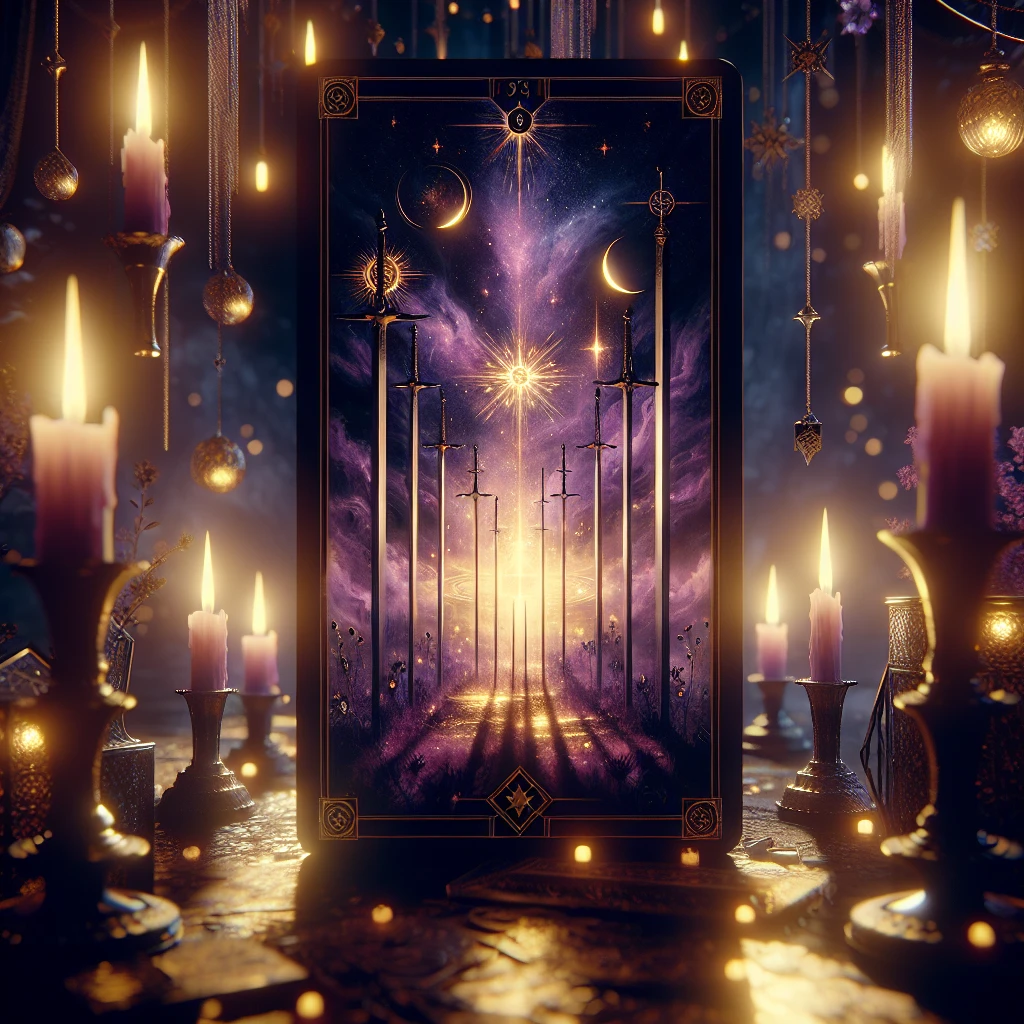
It is twenty to four, the flat is silent, and you are still rehearsing a conversation with your sister about who will look after your father next winter, a conversation that has not happened and may never go the way you fear. The Nine of Swords is a card about that hour. It describes anxiety at its most intense: worry, guilt, dread and the thoughts that grow louder when everyone else is asleep. Upright, the suffering is real, but its source is mostly in your head rather than in events. Reversed, the fear begins to loosen, or it goes underground and is carried in secret.
- Upright: anxiety, insomnia, guilt, dread, catastrophic thinking, mental exhaustion
- Reversed: relief, the worst not happening, recovery, or a fear kept hidden from others
- Suit & number: Swords, Nine (Minor Arcana); Nines belong to Yesod on the Tree of Life
- Element & decan: Air; Mars in Gemini, 10°–20°
- Yes/No: No, though the no comes from fear rather than fact
Does the Nine of Swords mean something bad will happen?
Usually not. The card shows how someone feels about a situation, not a verdict on how it will end. Look at what the image actually shows: nobody is attacking the figure in bed. The nine swords hang on the wall behind them, horizontal and still. The danger is in the mind, and that is where the card places your trouble too.
Your teenage son said he would be home by ten, his phone has gone to voicemail twice, and within half an hour you have imagined a hospital, a police call and a dozen other scenes. At ten past twelve he walks in, battery dead, entirely fine. The fear was sincere and the exhaustion afterwards is real, but none of the events you rehearsed took place. Most of the time, this card describes an evening like that one.
There are exceptions. When the cards around it are heavy, such as the Ten of Swords or the Five of Pentacles, the worry may rest on something that has already gone wrong. Even then, the Nine describes the weight of thinking about it, and it leaves the outcome open for the cards that follow.
How can you use the Nine of Swords as advice?
As advice, the card asks you to separate what you know from what you are imagining. Write the fear down in one sentence. Under it, list the facts you actually have. Often there are only two or three, and none of them says what the fear says.
It also advises against making decisions at night. Choices made in the small hours, by a tired mind that is already braced for disaster, tend to be the ones you regret. Wait until morning, eat something, and talk to one person you trust before acting. Many worries lose half their size once they are said aloud to someone who is not inside your head.
A reading reflects a state of mind; it cannot judge your health. If the sleeplessness or the dread has gone on for weeks, that is a reason to see a doctor, not to draw another card.
Where does the Nine of Swords fall in past, present and future?
In the past position, the card points to a period of worry or guilt that still shapes how you react. A stretch of sleepless months while caring for a parent, or a decision you still replay, can leave a habit of bracing for the worst.
In the present, it describes the state you are in now: alert, tired, and probably expecting more trouble than the facts justify. It asks for rest before strategy.
In the future position, it warns that a coming situation may cause a lot of anxiety. That is different from saying the situation will go badly. Seen in advance, the card gives you time to prepare, to ask the questions you fear, and to arrange support before the night-time spiral starts.
Is the Nine of Swords a no, and when does the worry ease?
As an answer, the card sits on the no side, and it helps to notice who is speaking. Upright, it says that right now fear is making the decision, so the honest reply is no, or not in this state of mind. Reversed, the answer softens toward a cautious yes, especially when the question is "Will this turn out better than I think?"
Timing with this card is about the length of a mood rather than a calendar date. The tension often peaks soon after the card appears and eases once the feared conversation or result actually arrives. Reversed, relief is already under way.
How does the Nine of Swords show up at work and with money?
A brown stain appears on your bathroom ceiling after the upstairs neighbours' washing machine leaks. By evening you have priced a new ceiling, a new floor and a legal dispute, and you lie awake doing sums. The next day the neighbours' insurer agrees to pay. That arc is how the card tends to appear with money: the estimate of the damage is far larger than the damage.
On the job, the card points to stress that follows you home, fear of a mistake becoming public, or dread before an appraisal, an audit or a difficult email. It can also show guilt about something you let slide. The card's practical message is to find out the real size of the problem. Ask the question, open the letter, check the account.
Reversed, a worry about a job or a debt starts to resolve, or you finally admit a problem you have been hiding from colleagues or family.
What does the Nine of Swords say about a relationship?
In love, the card shows anxiety inside or around a relationship. One partner keeps imagining what is on the other's phone, replays a sharp comment from dinner, or fears being left without any evidence. It can also show guilt: a secret kept, an apology not made, or regret over how a past relationship ended.
For a couple, the Nine of Swords often points to something that needs to be said and is instead being worried about separately, by both people, in the same bed. The relationship may be in better shape than either person believes. Reversed, the conversation finally happens and the tension drops, or one partner keeps a fear to themselves that the other cannot see.
Is the reversed Nine of Swords relief or a hidden fear?
Both meanings exist, and the question you asked usually decides between them. If you asked about a situation that has been frightening you, the reversed card often means the worst did not happen: the test result was fine, the argument blew over, the sleepless period is ending.
If the question is about how you are coping, the reversed card can instead show anxiety pushed out of sight. You are telling everyone you are fine, keeping a calm face at the dinner table, and carrying the fear alone. Here the card asks you to stop managing it in private. Other cards help: The Star or the Six of Swords nearby supports recovery, while The Moon or the Seven of Swords points to the hidden version.
What does the Nine of Swords say about someone's feelings?
When you ask what another person feels, this card describes worry and inner conflict rather than coldness. The person may care about you and also be anxious, guilty or afraid of getting something wrong. They may be lying awake over the relationship as much as you are. Their silence often means they are overwhelmed, not indifferent.
The bed, the quilt and the nine blades
On the Rider-Waite-Smith card a figure sits up in bed with their face in their hands. Nine swords are stacked horizontally on a black wall. The quilt is covered with roses and the signs of the zodiac, suggesting that comfort and order are still there, within reach. On the side of the bed, a small carved scene shows one person attacking another, a hint that the conflict is being replayed over and over. Marseille-pattern decks, where the pips carry only their suit signs, show nine curved blades woven into an oval around one straight sword and nothing else.
FAQ
Does the Nine of Swords point to nightmares?
It can describe bad dreams, since the image is literally a person woken in the night. More often it describes being awake: lying in the dark with thoughts that will not stop. In either case, the card points to what you are processing rather than to what will happen.
How do I tell the Nine of Swords from the Eight and the Ten of Swords?
Look at what each figure is doing. On the Eight, a bound and blindfolded person stands among blades in open country, unable to move, and the theme is feeling trapped. On the Ten, someone lies face down with ten swords in their back, and something has genuinely finished. The Nine sits between them: the person is free to get up, nothing has touched them, and still they cannot sleep for dread.
When two of these cards share a spread, check which one sits in the present position. That is the stage you are in now, and the other card shows where you have come from or what you are afraid of.
What does the Nine of Swords say about guilt over something I did?
It shows that the guilt is weighing on you heavily, perhaps more than the original mistake deserves. The card suggests either making amends or putting the event in proportion. A Six of Cups or Judgement nearby can point to a conversation that clears it.
What does the Nine of Swords mean in a question about my child?
It usually describes your worry rather than your child's situation. Parents draw this card when a child is growing up, travelling, failing an exam or simply going quiet. Ask a second question about the child directly, and treat the Nine as a sign that you need support with your own nerves.
Can the Nine of Swords show someone else's anxiety, such as my partner's?
Yes. When you ask about another person, or the card falls in a position that describes them, it can show that they are the one lying awake. A partner who has gone quiet, snaps over small things or scrolls late into the night may be carrying a worry they have not named.
The card then suggests asking gently what is on their mind, at a calm hour rather than late at night, and listening without trying to fix it straight away.